Thursday, June 27, 2024

Fyodor Lukyanov: Julian Assange has become a symbol of resistance to the US government
Fyodor Lukyanov: Julian Assange has become a symbol of resistance to the US government

The WikiLeaks founder is a man of great personal integrity who fell victim to changing western attitudes about media freedom
Fyodor Lukyanov: Julian Assange has become a symbol of resistance to the US government

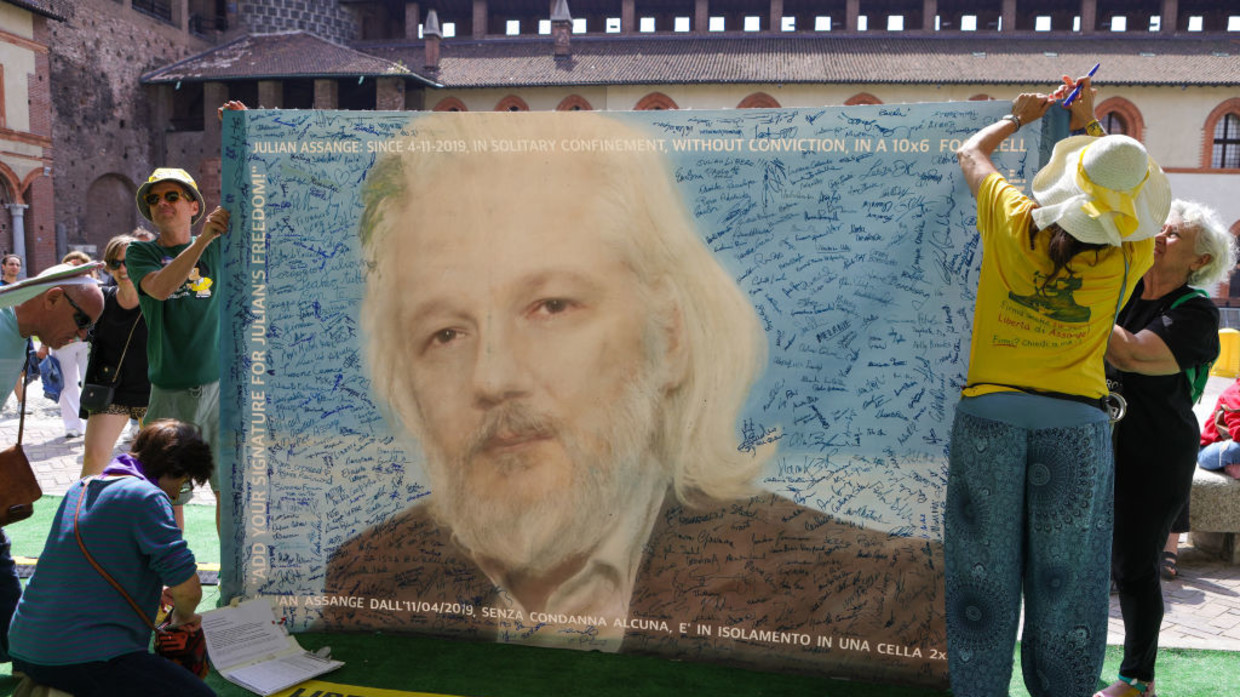
The long running and epic prosecution of Julian Assange seems to be coming to an end. The defendant has pleaded guilty to one of the charges against him – conspiracy to obtain and transmit classified information. He was sentenced to the time he has already served in a British prison, fighting extradition to the US. And now the case is closed.

Assange’s deal with the US Department of Justice is a relief for everyone. The journalist and activist himself cannot be criticized for agreeing – he has repeatedly demonstrated his personal integrity and courage. And there is no point in sacrificing himself for nothing. As for the American side, Assange’s hypothetical deportation to the United States would trigger another social and political conflict. And a confusing one at that. In favor of the WikiLeaks founder are many on the left and some on the right. Namely those who consider their own government to be anti-citizen and dictatorial. Against him are the official bureaucracy, nowadays more-so on the left, and conservative patriots who consider him a traitor. There’s already a lot of strife and polarization in American politics, so they hardly want to add more in the middle of an election campaign.

Anyway, if this is indeed the case, one can only be glad. It is also interesting to see how the overall situation has changed over the years for WikiLeaks. Assange himself has undoubtedly become a symbol of resistance to the American government, a legend and hero to like-minded people around the world. But the perception of the information made public by his work has changed over the twenty years of his activity.

The founders of WikiLeaks believed that in a democracy, citizens have a right to know what their elected leaders are up to, how closely those actions match what they say they are doing, and where their more secretive policies are leading. Almost immediately, the revelations were widely publicized, especially as they concerned two unpopular US military campaigns – in Iraq and Afghanistan. The publication of a huge trove of diplomatic correspondence between US embassies around the world and Washington caused a furore. It did not contain anything super-sensational, but it did reveal a large number of assessments that were clearly not intended for public consumption. In general, the main effort of the whistleblowers was to demonstrate the hypocrisy of American policy. This could hardly be news to anyone, but it is one thing to have a general idea, another to have tangible evidence.

WikiLeaks’ popularity peaked around 15 years ago. After that, Assange was systematically persecuted, attempts were made to block the site, and the project itself began to experience the inevitable disagreements that are part of any evolving process. But the environment was also changing. The phenomenon of ‘post-truth’, which was already being talked about in the noughties, has grown to such an extent that it has come to define the information landscape. The most common description of this concept is that it’s based on people’s willingness to accept arguments based on their beliefs and emotions rather than on what’s actually true. Accordingly, facts that contradict beliefs and emotions are often simply ignored or, at most, reinterpreted to fit the required narrative.

While this process began more as an act of information warfare, over time (rather quickly) it has become a structural element of the entire communication space. Discussion becomes less and less possible, because the arguments of the other side are not considered worthwhile, because they are labelled as deliberately falsified. And this approach has spread rapidly almost all over the world.

In such an atmosphere, exposés do not lose their importance, but begin to fulfil a different function. No one believes in the independence of individual publications; or should I say, only those whose world view they align with are willing to believe. And the other side now simply ignores them. In this sense, the evolution of Seymour Hirsch’s exposés is revealing. In the 2000s, his publications on Abu Ghraib prison caused a huge scandal and had a major impact on US policy. Now, the veteran journalist’s revelations – be they about Nord Stream or stories about the background of the Ukrainian conflict – have no impact on US policy and do not even trigger the need to respond in any way. To be fair, Hirsch’s revelations used to be more thoroughly evidence-based. 

The same can be said of the path taken by Wikileaks. When the resource first appeared, it was compared to the publication of the Pentagon Papers in the early 1970s – a leak of data on the Vietnam War organized by the ‘peace party’ in the US high command at the time. It is no coincidence that in the early years the material provided by Assange’s group was first published by the most prestigious newspapers in Western countries. But then it was reclassified as enemy disinformation or at least as narratives that favored adversaries. Interestingly, the veracity of these leaks has been never in doubt. But the goalposts were elegantly shifted from ‘what is it about’ to ‘who benefits from it’. And that is a very different conversation, in the spirit of a new round of the Cold War. 

This in no way detracts from Assange’s sincerity and idealism; he is a man of integrity. But it says a lot about how the public mood has changed.

This article was first published by Rossiyskaya Gazeta newspaper, translated and edited by the RT team

---------------------------
Source

https://www.rt.com/news/600066-fyodor-lukyanov-julian-assange/

Wednesday, June 26, 2024

Electing the Next Dictator: Ugly Truths You Won’t Hear from Trump or Biden

Electing the Next Dictator: Ugly Truths You Won’t Hear from Trump or Biden

“If liberty means anything at all, it means the right to tell people what they do not want to hear.”—George Orwell

No matter what carefully crafted sound bites and political spin get trotted out by Joe Biden and Donald Trump in advance of the 2024 presidential election, you can rest assured that none of the problems that continue to undermine our freedoms will be addressed in any credible, helpful way by either candidate, despite the dire state of our nation.

Certainly not if doing so might jeopardize their standing with the unions, corporations or the moneyed elite bankrolling their campaigns.

Indeed, the 2024 elections will not do much to alter our present course towards a police state.

Nor will the popularity contest for the new occupant of the White House significantly alter the day-to-day life of the average American greatly at all. Those life-changing decisions are made elsewhere, by nameless, unelected government officials who have turned bureaucracy into a full-time and profitable business.

In the interest of liberty and truth, here are a few uncomfortable truths about life in the American police state that we will not be hearing from either of the two leading presidential candidates.

1. The government is not our friend. Nor does it work for “we the people.” Our so-called government representatives do not actually represent us, the citizenry. We are now ruled by an oligarchic elite of governmental and corporate interests whose main interest is in perpetuating power and control.

2. By gradually whittling away at our freedoms—free speech, assembly, due process, privacy, etc.—the government has, in effect, liberated itself from its contractual agreement to respect our constitutional rights while resetting the calendar back to a time when we had no Bill of Rights to protect us from the long arm of the government.

3. Republicans and Democrats like to act as if there’s a huge difference between them and their policies. However, they are not sworn enemies so much as they are partners in crime, united in a common goal, which is to maintain the status quo.

4. Presidential elections merely serve to maintain the status quo. Once elected president, that person becomes part of the dictatorial continuum that is the American imperial presidency today.

5. The U.S. government is spending money it doesn’t have on foreign aid programs it can’t afford, all the while the national debt continues to grow, our domestic infrastructure continues to deteriorate, and our borders continue to be breached. What is going on? It’s obvious that a corporatized, militarized, entrenched global bureaucracy is running the country.

6. Forty years past the time that George Orwell envisioned the stomping boot of Big Brother, the police state is about to pass off the baton to the surveillance state. 1984 has become an operation manual for the omnipresent, modern-day surveillance state. For all intents and purposes, we now have a fourth branch of government. This fourth branch came into being without any electoral mandate or constitutional referendum, and yet it possesses superpowers, above and beyond those of any other government agency save the military. It is all-knowing, all-seeing and all-powerful. It operates beyond the reach of the president, Congress and the courts, and it marches in lockstep with the corporate elite who really call the shots in Washington, DC. The government’s “technotyranny” surveillance apparatus has become so entrenched and entangled with its police state apparatus that it’s hard to know anymore where law enforcement ends and surveillance begins. They have become one and the same entity.

7. When exposing a crime is treated as committing a crime, you are being ruled by criminals. In the current governmental climate, obeying one’s conscience and speaking truth to the power of the police state can easily render you an “enemy of the state.” The government’s list of so-called “enemies of the state” is growing by the day. What we are dealing with is a government so power-hungry, paranoid and afraid of losing its stranglehold on power that it is conspiring to wage war on anyone who dares to challenge its authority.

8. If voting made any difference, they wouldn’t let us do it. Americans only think they’re choosing the next president. In truth, however, they’re engaging in the illusion of participation culminating in the reassurance ritual of voting. It’s just another manufactured illusion conjured up in order to keep the populace compliant and convinced that their vote counts and that they still have some influence over the political process.

9. More than terrorism, more than domestic extremism, more than gun violence and organized crime, the U.S. government has become a greater menace to the life, liberty and property of its citizens than any of the so-called dangers from which the government claims to protect us.

10. The government knows exactly which buttons to push in order to manipulate the populace and gain the public’s cooperation and compliance. This draconian exercise in how to divide, conquer and subdue a nation is succeeding. This is how you use the politics of fear to persuade a freedom-endowed people to shackle themselves to a dictatorship.

11. The government long ago sold us out to the highest bidder. The highest bidder, by the way, has always been the Deep State. America’s shadow government—which is comprised of unelected government bureaucrats, corporations, contractors, paper-pushers, and button-pushers who are actually calling the shots behind the scenes right now and operates beyond the reach of the Constitution with no real accountability to the citizenry—is the real reason why “we the people” have no control over our government.

12. Every U.S. citizen is now guilty until proven innocent.

13. “We the people” are no longer shielded by the rule of law. While the First Amendment—which gives us a voice—is being muzzled, the Fourth Amendment—which protects us from being bullied, badgered, beaten, broken and spied on by government agents—is being disemboweled.

14. Privacy, as we have known it, is dead. Every second of every day, the American people are being spied on by the U.S. government’s vast network of digital Peeping Toms, electronic eavesdroppers and robotic snoops. Government eyes are watching you. They see your every move: what you read, how much you spend, where you go, with whom you interact, when you wake up in the morning, what you’re watching on television and reading on the internet. Every move you make is being monitored, mined for data, crunched, and tabulated in order to form a picture of who you are, what makes you tick, and how best to control you when and if it becomes necessary to bring you in line. Beware of what you say, what you read, what you write, where you go, and with whom you communicate, because it will all be recorded, stored and used against you eventually, at a time and place of the government’s choosing.

15. Private property means nothing if the government can take your home, car or money under the flimsiest of pretexts, whether it be asset forfeiture schemes, eminent domain or overdue property taxes. Likewise, private property means little at a time when SWAT teams and other government agents can invade your home, break down your doors, kill your dog, wound or kill you, damage your furnishings and terrorize your family.

16. If there is an absolute maxim by which the federal government seems to operate, it is that the American taxpayer always gets ripped off. The government’s schemes to swindle, cheat, scam, and generally defraud taxpayers of their hard-earned dollars have run the gamut from wasteful pork barrel legislation, cronyism and graft to asset forfeiture, costly stimulus packages, and a national security complex that continues to undermine our freedoms while failing to making us any safer. Americans have also been made to pay through the nose for the government’s endless wars, subsidization of foreign nations, military empire, welfare state, roads to nowhere, bloated workforce, secret agencies, fusion centers, private prisons, biometric databases, invasive technologies, arsenal of weapons, and every other budgetary line item that is contributing to the fast-growing wealth of the corporate elite at the expense of those who are barely making ends meet—that is, we the taxpayers.

17. From the moment they are born to the time they legally come of age, young people are now wards of the state. Parents no longer have the final say over what their kids are taught, how they are disciplined, or what kinds of medical care they need.

18. All you need to do in order to be flagged as a suspicious character, labeled an enemy of the state and locked up like a dangerous criminal is use certain trigger words, surf the internet, communicate using a cell phone, drive a car, stay at a hotel, purchase materials at a hardware store, take flying or boating lessons, appear suspicious, question government authority, or generally live in the United States.

19. The government is pushing us ever closer to a constitutional crisis.

20. Our freedoms—especially the Fourth Amendment—continue to be choked out by a prevailing view among government bureaucrats that they have the right to search, seize, strip, scan, spy on, probe, pat down, taser, and arrest any individual at any time and for the slightest provocation. Forced cavity searches, forced colonoscopies, forced blood draws, forced breath-alcohol tests, forced DNA extractions, forced eye scans, and forced inclusion in biometric databases are just a few ways in which Americans continue to be reminded that we have no control over what happens to our bodies during an encounter with government officials.

These are not problems that can be glibly dismissed with a few well-chosen words, as most politicians are inclined to do.

No matter which candidate wins this election, the citizenry and those who represent us need to own up to the fact that there can be no police state—no tyranny—no routine violations of our rights without our complicity and collusion—without our turning a blind eye, shrugging our shoulders, allowing ourselves to be distracted and our civic awareness diluted.

Likewise, as I make clear in my book Battlefield America: The War on the American People and in its fictional counterpart The Erik Blair Diaries, these problems will continue to plague our nation unless and until Americans wake up to the fact that we’re the only ones who can change things for the better and then do something about it. After all, the Constitution opens with those three vital words, “We the people.”

There is no government without us—our sheer numbers, our muscle, our economy, our physical presence in this land.

We are the government.

Tuesday, June 25, 2024

Slavery Re-Imposed

Slavery Re-Imposed

Last week, a most disturbing development took place that should concern all those who value liberty. The House of Representatives passed the National Defense Authorization Act and included in it a provision requiring the automatic enrollment of men from 18 to 26 years old for the draft. Before that, men were required to register for the draft when they turned eighteen, but whether to do that was up to them. Many of them didn’t, even though failing to register subjected them to criminal penalties. But the choice was theirs to make, and now, they won’t have it.

No one has actually been drafted yet, but calls for “national service” are in the air. This is an excellent time, then, to go over what is wrong with drafting people into the armed services, and this is what I’m going to do in this week’s article.

The fundamental point is easy to grasp. In a free society, everyone owns himself and his legitimately acquired property. Slavery is the greatest possible violation of your right to own yourself, and making the “state” your enslavers (actually the politicians who run the state) does not make things better. It makes them worse. As the great Murray Rothbard puts it in For a New Liberty, “Surely, for one example, there can be no more blatant case of involuntary servitude than our entire system of conscription. Every youth is forced to register with the selective service system when he turns eighteen. He is compelled to carry his draft card at all times, and, at whatever time the federal government deems fit, he is seized by the authorities and inducted into the armed forces. There his body and will are no longer his own; he is subject to the dictates of the government; and he can be forced to kill and to place his own life in jeopardy if the authorities so decree. What else is involuntary servitude if not the draft?”

There is an obvious objection that I’m sure has occurred to many of you. “If we rely on completely voluntary armed services, the why would people volunteer if we were engaged in war? True enough, people join the military now. But most of them don’t expect to fight, and for many in the military being deployed to Afghanistan or Iraq was an unwelcome surprise.” In fact, as Murray pointed out, our so-called “volunteer” military isn’t genuinely voluntary. You are free to join, but not free to leave. You can’t say, “I don’t want to fight—I’m out!” The “volunteer” army we have now is still slavery, albeit one that doesn’t include all men of military age, but only those who enlist. As Murray says, “While conscription into the armed forces is a blatant and aggravated form of involuntary servitude, there is another, far more subtle and therefore less detectable form: the structure of the army itself. Consider this: in what other occupation in the country are there severe penalties, including prison and in some cases execution, for ‘desertion,’ i.e., for quitting the particular employment? If someone quits General Motors, is he shot at sunrise?”

This point about the “volunteer” army returns us to the obvious objection that I mentioned earlier. Suppose we are engaged in a war and a young man of military age supports the war. Still, wouldn’t he prefer that others do the fighting? People will only enlist, under such circumstances, if they are aware that that the government will draft them if they don’t. In short, there is a “market failure” that the government needs to remedy.

The notion that the market cannot provide for defense is ridiculous. If you can buy anything else, why can’t you buy defenders as well? The real “problem” for the government is that people will fight only for what they really think is their vital interest. They won’t volunteer to spread the blessings of that false god “democracy” to savages and barbarians. As Ludwig von Mises notes in Socialism, people will fight if they think their existence is at stake: “War carried on pro aris et focis [for hearth and home] demands no sacrifice from the individual. One does not engage in it merely to reap benefits for others, but to preserve one’s own existence. This of course, is only true of wars in which individuals fight for their very existence. lt is not true of wars which are merely a means of enrichment, such as the quarrels of feudal lords or the cabinet wars of princes. Thus Imperialism, ever covetous of conquests, cannot do without an ethic which demands from the individual ‘sacrifices’ for the ‘good of the State.’”

Suppose, though, that we don’t get involved in a war. Compulsory national service is still a terrible idea. We should look at the military we have now. The armed services have become welfare agencies, especially for member of “protected” minority groups like racial minorities, ”trannies,” homosexuals. Those in the army are indoctrinated with “wokism.” Here is a sample of what is being done now, taken from a speech by Thomas Spoehr:” Wokeness in the military is being imposed by elected and appointed leaders in the White House, Congress, and the Pentagon who have little understanding of the purpose, character, traditions, and requirements of the institution they are trying to change. The push for it didn’t begin in the last two years under the Biden administration—nor will it automatically end if a non-woke administration is elected in 2024. Wokeness in the military has become ingrained. And unless the policies that flow from it are illegal or directly jeopardize readiness, senior military leaders have little alternative but to comply.

Woke ideology undermines military readiness in various ways. It undermines cohesiveness by emphasizing differences based on race, ethnicity, and sex. It undermines leadership authority by introducing questions about whether promotion is based on merit or quota requirements. It leads to military personnel serving in specialties and areas for which they are not qualified or ready. And it takes time and resources away from training activities and weapons development that contribute to readiness.

Much of the emphasis of wokeness today is on promoting the idea that America is fatally flawed by systemic racism and white privilege. Our fighting men and women are required to sit through indoctrination programs, often with roots in the Marxist tenets of critical race theory, either by Pentagon diktat or through carelessness by senior leaders who delegate their command responsibilities to private Diversity, Equity, and Inclusion instructors.

These indoctrination programs differentiate service members along racial and gender lines, which runs completely counter to the military imperative to build cohesiveness based on common loyalties, training, and standards. Traditional training and education programs used to combat racial and sex discrimination have been supplanted by programs that promote discrimination by replacing the American ideal of equality with the progressive ideal of equity—which in practice means unequal treatment based on group identity.

The Biden administration’s Chief of Naval Operations, Admiral Michael Gilday, decided last year to add Ibram X. Kendi’s book, How to Be an Antiracist—one of the leading sourcebooks on critical race theory—to his list of recommended readings. To give an idea of how radical Kendi’s book is, one of its famous (or infamous) arguments is that ‘Capitalism is essentially racist,’ and that ‘to truly be antiracist, you also have to be truly anti-capitalist.’”

Once a sufficient number of people have been indoctrinated in this way, the army could be used to suppress resistance movements by patriotic Americans who want to secede from this nefarious ideology. They would be forcefully beaten down and sent to concentration camps.

A compulsory draft would enable “President” Joe Biden and his gang of neo-con controllers to force everybody to accept this malign ideology. And given the racial quotas that now prevail, why would we think that the armed services could defend us anyway?

Let’s do everything we can to fight against this grave threat to liberty. No more draft registration!


Monday, June 24, 2024

Jim Jordan Should Ask Fauci This…

Jim Jordan Should Ask Fauci This...


As recently reported by Reclaim the Net, Anthony Fauci is being called to testify by House Judiciary Committee Chairman Jim Jordan for his “alleged role in the Biden White House’s censorship initiatives.”

Right away a glaring issue emerges: The censorship of dissenting Covid narratives started all the way back in late January-early February 2020, with Fauci implicated in the censorship as early as February 2, 2020. The Committee tacitly acknowledges this by requesting documents dating back to 2019, even as it frames the inquiry politically as a “Biden Administration censorship” problem.

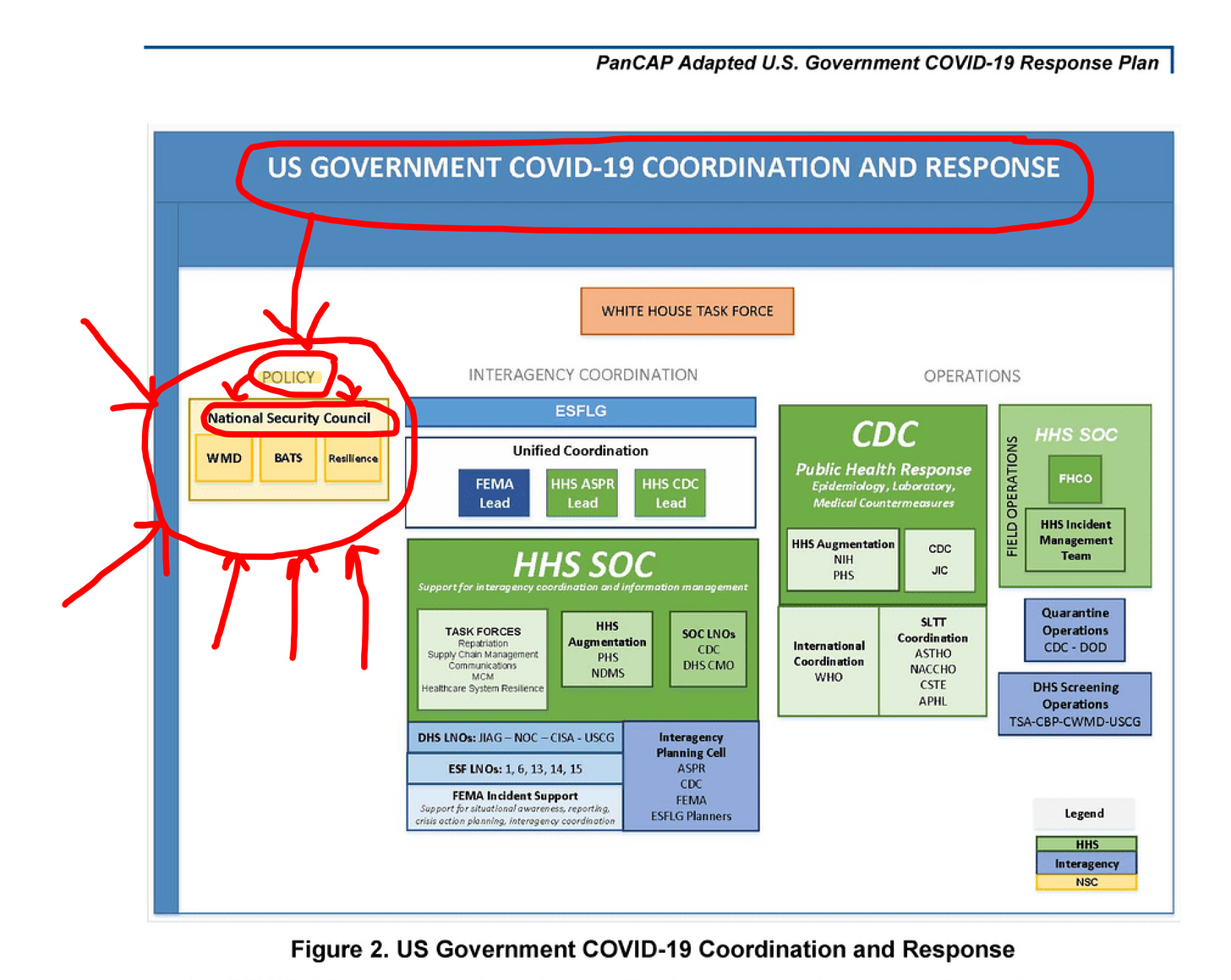
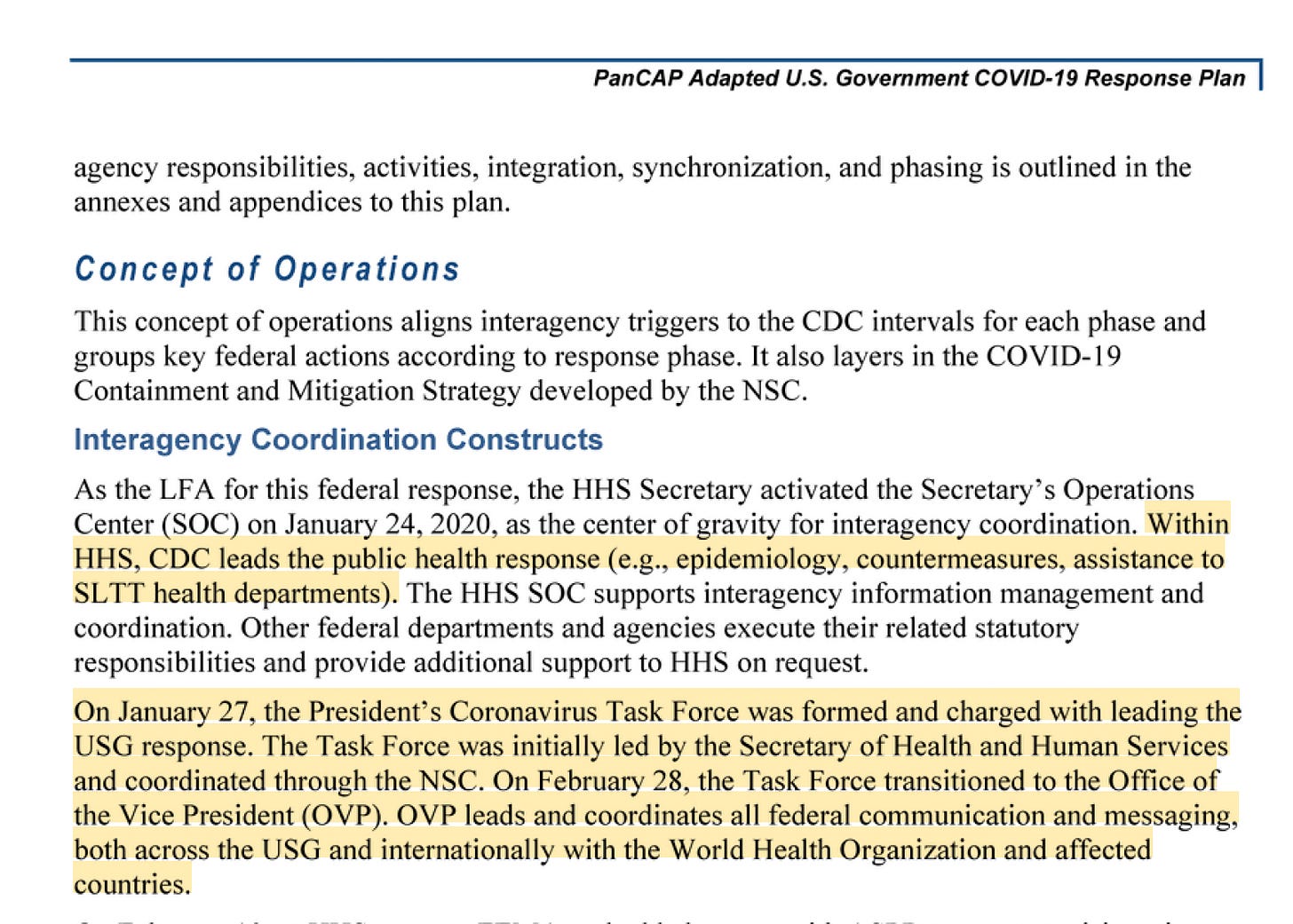
In fact, the entire disastrous, unscientific lockdown-until-vaccine pandemic response was initiated and insidiously perpetrated by the Task Force, which was housed in the Trump White House, in the Office of the Vice President (OVP). 

The group responsible for pandemic policy within the Task Force was not HHS or NIAID, where Fauci worked, or any other public health agency. It was the National Security Council (NSC).

All communications about Covid had to go through OVP/NSC.

We know from the Twitter Files and subsequent investigations that the Intelligence Community (FBI, CIA, DHS, CISA) was heavily involved in censoring Americans on many issues, starting at least as far back as 2016. Foreign military/intelligence agencies of allied countries collaborated on censoring the US population.

So if anyone is truly interested in who initiated and enforced censorship of dissenting Covid voices, they should ask the following questions of Fauci under oath:

Who was Responsible for the US Government’s Covid Response Policy, Including Censorship of Dissenting Views? 

We know from official government documents that Covid pandemic policy was set by the National Security Council (NSC), NOT the public health agencies. But who exactly on the NSC was in charge? Who wrote the policy?

  • Dr. Fauci: Did you participate in crafting the pandemic response policy with the National Security Council, including censorship of dissenting views?

Why Were Covid Meetings Classified? 

On March 11, 2020, Reuters reported that “The White House has ordered federal health officials to treat top-level coronavirus meetings as classified.” Reuters sources said, “the National Security Council (NSC), which advises the president on security issues, ordered the classification.” 

Furthermore, government officials said, “dozens of classified discussions about such topics as the scope of infections, quarantines and travel restrictions have been held since mid-January.”

  • Dr. Fauci: Why were the Covid response meetings classified? Were you present in those meetings? Were censorship plans discussed in those meetings? 

Who was in Charge of Government Communications about Covid?

According to the US Government’s COVID-19 Response Plan, starting on February 28, 2020 “all federal communication and messaging” about the pandemic had to go through the Office of the Vice President, which housed the Task Force, which was led by the National Security Council. 

  • Dr. Fauci: In your role on the Task force, were you in charge of crafting the communications about the pandemic? If not, who on the Task Force was in charge of messaging?
  • Were you in charge of efforts to censor messaging that questioned or contradicted Task Force/NSC policy? 
  • If not, who was in charge of designing and enforcing the censorship efforts on behalf of the Task Force/NSC?

Why was the CDC Forbidden from Communicating about the Pandemic?

Although it was supposed to play a leadership role in pandemic communications, starting on February 28, 2020, the CDC was actually “not permitted to conduct public briefings,” according to a Senate report.

It sounds like the agency that was supposed to be in charge of communicating with the public about the pandemic was itself being CENSORED by the Task Force/NSC.

  • Dr. Fauci, who forbade the CDC from conducting public briefings about the pandemic?
  • Why were CDC communications with the public completely shut down?
  • Was this part of the overall efforts by the Task Force/NSC to censor any messaging that contradicted their policy?

Why was the Intelligence Community so Heavily Involved in Covid Censorship?

Many deeply and carefully investigated reports show extensive involvement of military/intelligence agencies and personnel in Covid censorship efforts.

Here are just a few examples:

How Twitter Rigged the Covid Debate, by David Zweig

Pentagon Was Involved in Domestic Censorship Scheme, by Alex Gutentag

The Virality Project Was a Government Front to Coordinate Censorship, by Andrew Lowenthal and Alex Gutentag

  • Dr. Fauci, were you coordinating with the FBI, CIA, DHS, CISA, or any other intelligence entity to censor messaging that questioned or contradicted Task Force/NSC policy?
  • Why were intelligence agencies involved in censoring Covid messaging?

Were International NGOs and the WHO Involved in the Censorship of American Citizens?

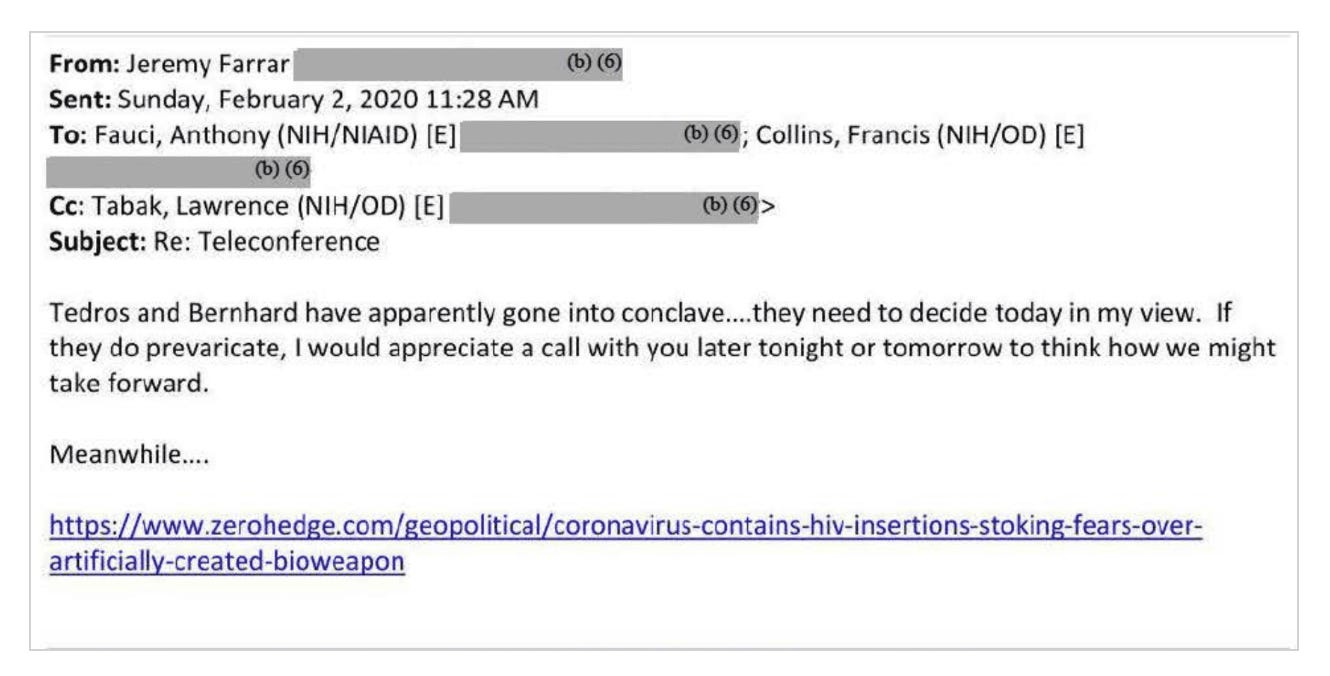
Here’s one of the earliest known instances of Covid censorship from all the way back in February 2020, in which the following international cast participated:

As reported by US Right To Know

on Sunday, February 2, 2020, at 11:28 am

Farrar flagged a ZeroHedge article [now archived] in an email to Fauci and Collins, raising the possibility of virus=bioweapon. In the email, he mentioned that the WHO leaders were in the process of making an important decision. He said they might “prevaricate” which means “avoid telling the truth.”

Regardless of whether they prevaricated or not, just two and a half hours later, at approximately 1:57 pm ZeroHedge was suspended on Twitter.

  • Dr. Fauci, was your correspondence with Farrar, involving the leaders of the World Health Organization, in any way related to the suspension of ZeroHedge on Twitter?
  • If so, which of you was responsible for conveying the message to Twitter about the suspension?
  • Were international organizations like the WHO, and NGOs including the Wellcome Trust, involved in Covid censorship activities in coordination with US officials/agencies?
  • Were you involved in any international Covid censorship activities?

Republished from the author’s Substack


Published under a Creative Commons Attribution 4.0 International License
For reprints, please set the canonical link back to the original Brownstone Institute Article and Author.

Author

  • Debbie Lerman, 2023 Brownstone Fellow, has a degree in English from Harvard. She is a retired science writer and a practicing artist in Philadelphia, PA.

----------------------------------
Source

https://brownstone.org/articles/jim-jordan-should-ask-fauci-this/

Sunday, June 23, 2024

The Vials and the Damage Done: Canada’s National Microbiology Laboratory Scandal, Part II

The Vials and the Damage Done: Canada’s National Microbiology Laboratory Scandal, Part II

Peter Shawn Taylor
May 19, 2024

In China, minor security infractions are routinely punished with lengthy jail terms in dreadful conditions. In Canada, it’s just the opposite. Clear evidence of espionage is rewarded with a free pass back home after the mission is complete. Neglecting our national security in this way may suit the Justin Trudeau government, but it is doing great harm to Canada’s relationship with its most important allies. In the concluding instalment of his two-part series, Peter Shawn Taylor examines the many ways in which the spy scandal at the National Microbiology Laboratory in Winnipeg has damaged Canada’s international standing and contributed to the growing perception that Canada is a foreign agent’s happy place. (Part I is here.)

It is said there are two kinds of secrets in Ottawa: secrets of national importance and secrets of political importance. Some things can’t be publicly revealed because it might endanger Canada’s national security, imperil diplomatic negotiations or weaken our international competitive position. And some other things are kept away from the public eye simply because the information could prove damaging to the government of the day. One of the many questions arising from the recent release of a massive collection of declassified documents related to the spy scandal at Canada’s top-security National Microbiology Laboratory (NML) in Winnipeg is in which category this once-secret trove of information belongs.

As described in Part I of this series, the Justin Trudeau government fought ferociously to prevent the release of the files regarding married NML scientists Xiangguo Qiu and Keding Cheng and their connection to Chinese military interests. At one point, the government even threatened to sue the Speaker of the House of Commons to keep the material secret. Following the 2021 election, however, the weakened minority Liberal government relented and made the documents available to a special ad hoc committee of MPs and judges, who then decided it was in the public’s interest for most of the information to be declassified.

Prime Minister Justin Trudeau’s (top left) government fought hard to avoid disclosing classified documents concerning scientist couple Xiangguo Qiu and Keding Cheng (bottom left, left to right) – suspected of using their positions at Winnipeg’s top-security National Microbiology Laboratory (NML) (bottom right) to further the interests of Communist China. (Sources of photos: (top left) CBC; (bottom left) Governor General’s Innovation Awards; (bottom right) Winnipeg Architecture Foundation)

The 623-page document, released this past February, includes reports from the Canadian Security Intelligence Service (CSIS) and other internal briefings that reveal the many ways Qiu and Cheng acted against the interests of Canada. This includes clandestinely as well as openly transferring intellectual and physical property to Chinese institutions in addition to allowing access to their lab by Chinese researchers, many of whom had direct links to China’s People’s Liberation Army (PLA) and its bioweapons aspirations. Qiu and Cheng also appear to have been involved with numerous Chinese “talent” programs – thinly-veiled espionage schemes designed to steal know-how from other countries.

Qiu appears to have played a leading role in several significant research projects at the now-notorious Wuhan Institute of Virology (WIV) while also working for Canada’s federal government. Of note, she arranged to send 30 vials of deadly Ebola and Henipah virus samples from NML’s stockpile to the WIV for reasons that were deliberately kept hidden from her Canadian employers. After their deceptions were uncovered and they were fired from the NML, Qiu and Cheng quietly left the country without any legal consequences. They are currently living in China under new names, evidently working in their preferred occupations.

“Deeply embarrassing”: China expert and former diplomat Charles Burton says the long delay in releasing the declassified documents, along with a flurry of other China-related bills and hearings in Ottawa, speaks to the fact “the government has become very vulnerable on China.”

With all this finally in the public domain, it’s now possible to determine why the Liberals were so intent on keeping the files secret. Does this information harm Canada’s national interests, or merely the political interests of the Trudeau Liberals? In fact, it does great damage to both. And much more besides.

Red-faced on China

“This is deeply embarrassing for the government,” observes Charles Burton. The long battle over keeping the NML documents secret, he says in an interview, “was mostly about covering up poor decisions made by the people in charge of the lab while two scientists carried on this extraordinary relationship with China.” Burton is a senior fellow at Sinopsis, a China-focused think-tank based in Prague; he’s also a former diplomat at Canada’s embassy in Beijing and a recently retired professor of political science at Brock University in St. Catharines, Ontario. While Qiu and Cheng’s surreptitious connections to China were initially uncovered in 2018, Burton notes it wasn’t until 2021 that they were finally fired, and it took another three years before all the details were released. “That something so egregious was kept from the public for so long is really quite troubling,” he says.

The “troubling” NML scandal is just one of many China-related issues bedeviling the federal Liberals. The documents landed just ahead of the current Public Inquiry into Foreign Interference in Federal Electoral Processes and Democratic Institutions, which also coincides with new legislation on the registry of foreign agents. This recent flurry of activity “shows the government has become very vulnerable on China,” Burton observes.

The foreign interference inquiry’s initial report, for example, establishes clear evidence of Chinese involvement in several electoral constituencies during the 2019 and 2021 federal elections. One particularly egregious example is Trudeau’s refusal to act on CSIS warnings about possible Chinese interference at a Liberal nomination meeting in the Toronto riding of Don Valley North (DVN) in 2019 because, as inquiry commissioner Marie-Josée Hogue wrote, doing so could “have direct electoral consequences as the [Liberal Party of Canada] is expected to win DVN.” In other words, Trudeau put his party’s election prospects – and his own desire to remain prime minister – ahead of concerns about China’s influence over Canada’s democratic processes.

That the Liberals are soft on China is hardly a revelation. As Burton notes, it dates back to Trudeau’s failed attempt to open free trade talks with China in 2017. Since then, his Liberal government has been reluctant to treat China as the threat to Canada it has repeatedly proved itself to be. Instead, Ottawa has gone to great lengths to avoid angering Beijing. Examples include the long delay in banning Huawei from Canada’s 5G networks, China’s years-long detention of the Two Michaels, the lingering presence of secret Chinese police stations in Canada, the David Johnson special rapporteur debacle, and on and on.

The Liberals’ soft spot: Following Trudeau’s failed attempt to obtain a free trade deal with China – shown here meeting Chinese President Xi Jinping in Beijing, December 2017 – his government has repeatedly avoided confronting China on many significant issues related to Canada’s national security. (Source of photo: The Canadian Press/Sean Kilpatrick)

Asked if the recent blitz of activity on the China file represents a sea change in the current government’s attitude towards China, Burton remains deeply skeptical. “I don’t think the Liberals are prepared to do anything that would ever permanently compromise their larger project of Canada gaining significant market share in China,” he says, adding, “the Liberal Party still doesn’t get the message that China is not a nation we can engage with, without significant cost to the integrity of Canadian values.”

The Weakest Link

While clearly damning, the incremental damage done by the NML files to the Liberals’ reputation on China is likely minimal. It’s hard to imagine it getting any worse. The more significant blow, says Christian Leuprecht, is to Canada’s international reputation as a vigilant and reliable ally. “For years the Liberals have been accused of not taking the China threat seriously,” says Leuprecht, a national security expert and professor of political science at Queen’s University and the Royal Military College of Canada, both located in Kingston, Ontario. “As a result, Canada is currently under significant international scrutiny, especially from our allies in NATO and the U.S., who are concerned about the extent of Chinese infiltration of Canadian political institutions.”

In friendly Western countries, Leuprecht observes in an interview, the Trudeau government’s passivity in the face of Chinese aggression has created the perception Canada does not take matters of national security or defence seriously. And this is weakening the country’s stature abroad. Perhaps the biggest consequence is that Canada is no longer treated as a top-tier member of NATO, the premier Western military alliance. “We are increasingly being left out of meetings, our speaking time is vastly reduced and information is not being shared,” Leuprecht observes.

“Our worst fears”: According to national security expert Christian Leuprecht, the NML spy scandal is a significant blow to Canada’s international reputation; the revelation that Chinese agents penetrated Canada’s highest-security biohazard lab reinforces the belief that Canada is “the weak link” among Western allies.

This contention is backed by Kerry Buck, Canada’s former ambassador to NATO. In a recent interview with the CBC Buck explained that Canada currently occupies NATO’s so-called “quadrant of shame” due to its poor track record on both defence spending and military research. Other evidence of Canada’s waning relevance among its allies includes its exclusion from the expanding Australia/UK/U.S. (AUKUS) defence relationship and from the Quadrilateral Security Dialogue, an informal pact among the U.S., Australia, Japan and India meant to contain Chinese expansion in the Pacific and Indian oceans.

At a time when our allies seem less willing to engage with Canada on defence matters, evidence that our highest-security biohazard lab was exploited by federally-employed Chinese agents strikes to the very core of our reliability. “This is confirmation of our worst fears,” says Leuprecht. “No other country, at least from what we know, has experienced the same degree of infiltration. Everything in these documents reinforces the perception that Canada is the weak link.”

Leuprecht emphasizes that Canada is a small player in the intelligence world, and the worsening perception that the country can’t be trusted to keep its own secrets safe will give allied countries further pause when considering whether to share intelligence with Canada or to include it in operational plans. “None of our allies really needs Canada [in order] to do the things they want to do,” Leuprecht says. “So this significantly reduces our leverage and influence to do the things we want to do internationally. That’s what’s really at stake here.”

“Quadrant of shame”: Kerry Buck (left), Canada’s former ambassador to NATO, notes that her country belongs to a special category of underperforming NATO members due to its lack of commitment on defence spending and military research; this perception has also seen Canada excluded from newly-established security partnerships such as the Australia/UK/U.S. (AUKUS) defence relationship. Shown at right, an AUKUS meeting in March 2023. (Sources of photos: (left) The Foreign Policy Project; (right) Chad J. McNeeley, DOD)

Who Dropped the Ball?

Beyond the harm done to Canada’s political and international reputations, the release of the Qiu-Cheng files puts the performance of domestic agencies involved in the affair, including CSIS, the RCMP and Canada’s federal bureaucracy, under the microscope as well.

Alongside the many Canadian journalists and politicians who have been pouring through the documents, Leuprecht notes that foreign intelligence services will also be studying them carefully and making their own judgements. “What will German intelligence or MI6 or the CIA think about collaborating with Canada in the future when they read these files?” asks Leuprecht. “The first thing they will see is a bunch of rookie mistakes.”

As described in Part I, Qiu and Cheng first came to the attention of CSIS following a routine “insider threat briefing” at the NML in August 2018. An initial investigation into their activities turned up plenty of worrisome evidence, including a Chinese-registered patent filed in Qiu’s name and numerous violations of NML security protocols by Cheng regarding data storage, email security and access to the lab by his foreign research students. All of this could have been sufficient to immediately remove the pair from Canada’s only Level 4 Biosafety Laboratory (BSL4). Yet they didn’t lose their security clearances until July 2019, and weren’t fired until January 2021. Should CSIS bear any responsibility for this lengthy delay?

Phil Gurski is a former strategic analyst at CSIS and principal of Borealis Threat and Risk Consulting. He’s also the author of several books on terrorism. While readily admitting a bias in favour of his former colleagues, Gurski says his reading of the documents is that CSIS acquitted itself ably throughout the affair. In quickly identifying Qiu and Cheng as possible threats, he says in an interview, “CSIS did its job properly. It found things that were inconsistent and worrisome. If someone else dropped the ball, that’s on them.”

Someone else dropped the ball: Phil Gurski, a former strategic analyst at the Canadian Security Intelligence Service (CSIS), says the agency did its job by quickly identifying Qiu and Cheng as possible security threats and informing its federal clients of this fact. Shown at left, CSIS national headquarters building in Ottawa. (Source of left photo: CSIS Canada/Facebook)

Gurski points out that CSIS is merely an intelligence-gathering agency and is not allowed to arrest anyone or carry out any other law enforcement activities. It can only make recommendations to the federal institutions it serves. When it came to dealing with Qiu and Cheng, that decision rested with the Public Health Agency of Canada (PHAC), which oversees the NML. As explained in Part I, PHAC’s handling of the two scientists was a tedious and unhurried affair, frequently bogged down by human resources requirements and union grievances, including allegations the original CSIS investigation was racist.

Leuprecht further suggests the NML was slow to react because senior administrators were blinded by the celebrity of Qiu, who won a Canadian Governor General’s Innovation Award in 2018 and was internationally recognized for her work on Ebola. “The lab had this superstar scientist and it prioritized a research culture and international collaboration over national security procedures,” he asserts.

“Superstar scientist”: According to Leuprecht, Qiu’s international reputation could have blinded the NML to the concerns that she and her husband were secretly working on behalf of China. Shown, Qiu (at right) accepts a Governor General’s Innovation Award at Rideau Hall from Governor General Julie Payette in 2018. (Source of photo: CBC)

As for CSIS’s conduct, Leuprecht agrees with Gurski’s positive assessment. “My sense is that CSIS did what it was supposed to do,” he says. “There is no suggestion they didn’t take the threat seriously.” Canada’s rookie mistakes, he explains, lie with the bureaucrats and politicians who should have acted with greater alacrity on the information they were given.

Picking Flowers, Making Honey

When he released the once-secret documents in February, federal Health Minister Mark Holland, who is responsible for PHAC, tried to explain away the massive security breach by arguing that such a thing had been impossible to predict at the time. “The extent to which China was attempting to influence the scientific community or to interfere in Canada’s domestic affairs was not known to the extent it is today,” he declared at a press conference the day the files were released. “The threat environment was in a very different place.”

Such claims of innocence are absurd, snaps Leuprecht. Chinese intentions regarding the theft of Western knowledge were obvious prior to the investigation into Qiu and Cheng. He points to a 2018 report by the Australian Strategic Policy Institute (ASPI), entitled Picking Flowers, Making Honey, that detailed many years of rampant Chinese infiltration of Western universities at the behest of PLA interests.

ASPI data showed Canada ranked third, behind the U.S. and UK, in terms of problematic collaboration between PLA scientists and institutions of higher learning. If that reference is too obscure, Leuprecht offers up his own Toronto Star commentary from the same year headlined “China’s silent invasion of Western universities” that provided a similar warning. “To claim no one knew what China was up to by 2019 is nonsense, complete nonsense,” he fumes. Besides, given the NML’s status as Canada’s highest-security biohazard lab, those in charge should have been alert for all possible risks and incursions, not just those from familiar enemies.  

Flowers picked, honey made: According to the Australian Strategic Policy Institute (ASPI), Canadian universities rank third, after the U.S. and UK, in the prevalence of academic collaboration with researchers connected to the Communist regime’s People’s Liberation Army (PLA). (*As measured by peer-reviewed literature co-authored by PLA scientists, 2006-2017) (Source of graph: ASPI)

Today, even the Trudeau government seems to grudgingly acknowledge it took far too long to recognize the threat Qiu and Cheng posed to Canada’s national security. During a grilling by Conservative MP Michael Chong at the House of Common’s Canada-China Committee last month, Nathalie Drouin, national security intelligence advisor to the prime minister and Deputy Clerk of the Privy Council, admitted that, “From the first signal to the moment the two scientists were put on leave, yes there is a timeline that needs to be looked at.” In response Chong pointed out that the Royal Bank of Canada recently fired its Chief Financial Officer for breaching its code of conduct after an investigation that lasted less than a month. “Two and-a-half years to terminate someone for cause seems like an awfully long time,” he remarked drily.

Despite the many obvious failures in monitoring access to and activities within Canada’s only BSL4 lab, it seems remarkable that no one other than Qiu and Cheng has ever been held to account for the many security oversights and errors in judgement. During his appearance before the Canada-China Committee on April 8, Holland maintained that “the Public Health Agency acted appropriately throughout the process” and said he did not expect anyone else to be fired as a result. He further claimed Ottawa has fixed all the holes in its security procedures revealed by the NML scandal. Then again, Holland previously asserted that “at no time did sensitive information leave the country,” a patently false statement given the wealth of know-how Qiu clandestinely shared with the WIV, not to mention the 30 vials of deadly virus samples she delivered to Wuhan.

“An awfully long time”: Under questioning from Conservative MP Michael Chong (left) at an April meeting of the House of Common’s Canada-China Committee, Nathalie Drouin (right), national security intelligence advisor to the prime minister, reluctantly agreed it took far too long to fire Qiu and Cheng. (Source of screenshots: House of Commons)

As for the RCMP, it claims – with an apparently straight face – to be still investigating Qiu and Cheng. This despite the fact they are now living and working in China, far from the Mounties’ reach. While they may have escaped Canadian justice, Gurski says it’s obvious to him that Qiu and Cheng broke Canadian laws. “You had two people who weren’t who they said they were and who had access to very sensitive technology and information working for a country that is not an ally of Canada,” Gurski explains. “At a minimum, I’d say that’s espionage.”

Leuprecht agrees. “That they were allowed to walk out of the country seems quite stunning,” he notes. “If you want to keep someone in the country, there are lots of ways to go about it.” As it was, they apparently left during the Covid-19 pandemic at a time when China had closed its borders to international air travel. This suggests a deliberate arrangement between Canada and China to keep the whole matter quiet. That’s not how our neighbours do it.

Tougher Action South of the Border

In 2020 U.S. President Donald Trump cancelled the visas of more than 1,000 Chinese students and researchers in the U.S. because of their links to universities with ties to the Chinese military. At the time, this presidential proclamation was widely decried as a “costly policy” motivated by “anti-Asian racism”. Today, it seems like common sense, particularly since the Biden Administration has kept it in place.

No pussy-footing around: The U.S. takes a firm approach towards potential Chinese espionage and frequently announces the prosecution of researchers and academics who have hidden their participation in China’s notorious Thousand Talents Program.

Regardless of who is in the White House, the U.S. takes a far stricter view of Chinese interference than does Canada. The FBI maintains a website solely designed to warn American employers about the threat posed by China’s numerous “talent” programs. And the U.S. Department of Justice regularly prosecutes American residents who hide their involvement in such schemes. In 2021, NASA scientist Mayya Mayyappan was fined and sentenced to a month in jail for lying about his participation in China’s national Thousand Talents Program (TTP), as well as hiding evidence of his association with a Chinese university. Last year Charles Lieber, former chair of Harvard University’s Chemistry and Chemical Biology Department, was similarly punished for his long-time secret affiliation with the TTP and for failing to pay taxes on the US$50,000 per month it was paying him.

In addition to cracking down on talent program participants, the U.S. takes a tougher stance on all forms of espionage and intellectual theft. Two months ago, for example, the FBI announced the arrest of Canadian Klaus Pflugbeil and Chinese national Yilong Shao for allegedly conspiring to steal information from a Tesla-owned battery plant in Canada on behalf of Chinese interests. “Today’s arrest demonstrates that this Office will prosecute those who engage in theft of trade secrets and places U.S. companies at a competitive disadvantage, undermines innovation and creates a potential national security risk,” reads the U.S. Department of Justice press release. You won’t find such sternly-worded press releases – or the actions to back them up – in Canada.

First try: Electric-car battery expert Yuesheng Wang, a former Hydro-Québec employee, is the only person ever charged in Canada with economic espionage under the 2001 Security of Information Act. He is still awaiting trial. (Sources of photos: (left) Yuesheng Wang/LinkedIn; (right) Gene.arboit, licensed under CC BY-SA 3.0)

In fact, only one person has ever been charged in Canada with economic espionage under the federal Security of Information Act of 2001. Yuesheng Wang was an electric car battery expert at Hydro-Québec when he was arrested in 2022 for allegedly participating in a Chinese talents program and illegally transferring corporate knowledge to China. He is still awaiting trial.

The enormous discrepancy in how Canada and the U.S. deal with such matters is partly explained by flaws in Canada’s legal system regarding the investigation and prosecution of espionage. As an intelligence-gathering service, CSIS is best placed to identify such crimes. And while it can’t enforce any laws on its own, it can share its findings with the RCMP, Canada’s national police force. Unfortunately, this relationship is often awkward and complicated by the fact CSIS intel is not admissible in court because the agency refuses to disclose its sources and methods. “If defence lawyers ever get a whiff of the fact the RCMP has relied on CSIS information,” warns Gurski, “they will demand to test that information in court.” As a result, cases built on CSIS evidence can collapse during trial or are never prosecuted in the first place. It is therefore possible that Qiu and Cheng were allowed to leave the country because Crown prosecutors knew the mountain of evidence against them was inadmissible. The FBI, on the other hand, is both an intelligence gathering and law enforcement agency, and accordingly faces none of these structural problems.

In addition to a serious gap in Canadian law enforcement capabilities, Gurski points out Canada also lacks a “culture of national security”. The politicians and bureaucrats on the receiving end of CSIS reports habitually discount or ignore the evidence they contain because they put a low priority on issues of national security. This is one of the main takeaways from the current foreign interference inquiry: repeated CSIS warnings about Chinese sabotage of Liberal Party nomination meetings or intimidation directed at Conservative MPs (including Chong) were simply not acted upon because no one thought it was very important.

An awkward relationship: Prosecuting spies in Canada is complicated by the fact CSIS refuses to disclose its sources and methods in court, while the RCMP, Canada’s national police service, lacks CSIS’s expertise in intelligence gathering. Shown, CSIS Director David Vigneault (left) and RCMP Commissioner Michael Duheme (right) at a parliamentary hearing in February 2024. (Source of photo: The Canadian Press/Justin Tang)

The long delay in confronting the threat posed by Qiu and Cheng might also be ascribed to what Gurski calls “inconvenient intelligence”. That is, CSIS warnings may have conflicted with the Liberal government’s pre-existing attitude towards China. Dealing head-on with Chinese espionage at the NML would likely have angered China, and caused it to retaliate, as it did in the Two Michaels affair. Australia similarly faced a devastating ban on coal exports to China after it raised concerns about Chinese spying. And the Liberals would have been very keen to avoid such unpleasantness.

By comparison, says Gurski, the U.S. and UK governments place a high value on their own counterintelligence programs and frequently take immediate and forceful action based on what their spy agencies tell them. This is not to say other countries haven’t also suffered from Chinese espionage efforts, or made mistakes in how they deal with such threats. But at least they are actively trying to defend themselves.

Spies Welcome

Despite the wealth of information included in the NML document dump, Leuprecht admits it is impossible to determine the true nature of Qiu and Cheng’s deception. They could have been sleeper agents of the sort featured in the TV series The Americans, inserted into Canadian society decades ahead of their mission. Or they might have been recruited only after gaining access to the highest levels of the NML. It is even possible they were simply naïve dupes manipulated by clever Chinese operatives into doing the bidding of the PLA under the guise of improving international scientific collaboration. Regardless, what stands out for Leuprecht is “the boldness with which they continued operating even after they’d been tipped off.”

One final mission: According to the declassified documents, Qiu (shown at top working at the NML) was aware she was being watched by her employer when she sent 30 vials of Ebola and Henipah virus samples to China’s Wuhan Institute of Virology in March 2019 prior to having her security clearance revoked. Shown, the devastating effects of Ebola in Guinea (bottom left) and Henipah in India (bottom right). (Sources of photos: (top) CBC; (bottom left) EU Civil Protection and Humanitarian Aid, licensed under CC BY-NC-ND 2.0; (bottom right) Sky News)

Of particular interest is that shipment of 30 vials of deadly Ebola and Henipah virus samples from the NML to the WIV on March 29, 2019. As the declassified CSIS files show, these materials were considered crucial to a research project at the WIV headed by Qiu. Yet at the time of the shipment, Qiu and Cheng already knew they were being watched; both had been interviewed about their security protocol habits by an independent investigator hired by the PHAC on February 15, 2019.

“My guess,” says Leuprecht, “is that they got direction from Beijing to get whatever they could out of the lab and that they would be taken care of and rewarded.” Given how things turned out – with both Qiu and Cheng now living comfortably in China in high-profile academic positions under new names – it seems an entirely reasonable bit of speculation.

And it is this final twist that represents the most serious and longest-lasting blow delivered by the entire Qiu-Cheng affair: the signal to the world that Canada is a spy’s happy hunting grounds. Not only were Qiu and Cheng allowed to keep their security clearances for 10 months after being identified as possible threats, but they were also able to successfully complete their final task. And afterwards they left Canada for China – perhaps extracted is a better term – without any legal repercussions or sanctions. It is a tale that will resonate not just with agents on the hunt for sensitive information about viruses useful to China’s bioweapons plans, but anyone seeking to penetrate numerous other Canadian research facilities in the government, university and private sectors across a multitude of other key scientific and technological areas.

“The message we are sending is that if you want to infiltrate a country, Canada is a great place to go,” declares Leuprecht. “We are not particularly vigilant, and if we do catch you, we will let you leave the country so you can have a great career in China afterwards. If you were sitting in China reading through these 623 pages, you’d say to yourself, ‘Canada, that’s the country we’re going after.’”

“Canada is a great place to go”: The fact Qiu and Cheng returned to China without any legal repercussions sends a clear message to other foreign agents, says Leuprecht. “We are not particularly vigilant, and if we do catch you, we will let you leave the country.” 

Peter Shawn Taylor is senior features editor at C2C Journal. He lives in Waterloo, Ontario.

Source of main image: Shutterstock.

-------------------------------
Source

https://c2cjournal.ca/2024/05/the-vials-and-the-damage-done-canadas-national-microbiology-laboratory-scandal-part-ii/

Canada’s Allison Inquiry: Riveting Testimonials of the Damage Done

Canada’s Allison Inquiry: Riveting Testimonials of the Damage Done Here’s a selection of testimonials to get you up to speed. Tess Lawrie, M...